An evening dedicated to AI and innovation
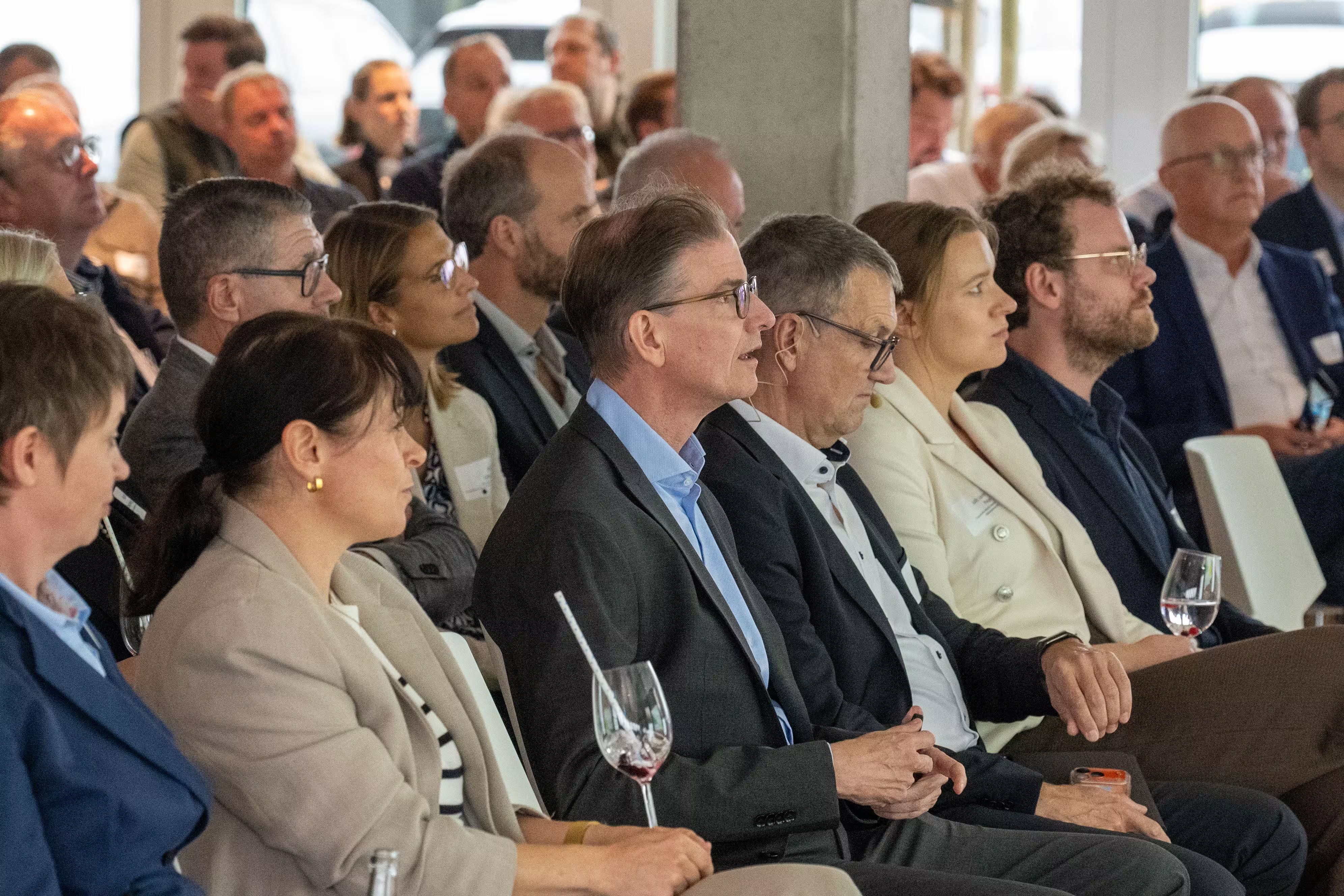
Under the theme "Smart Farming & Food", regional publisher OM-Medien had invited guests to the 2nd OM-Forum Agrar – and the response was strong: close to 200 participants from farming, industry, politics and academia came to Emstek. The evening opened with a keynote by Dr. Christian Bock of Landwirtschaftliche Rentenbank, Germany's development bank for agriculture.
His core message, as summarised by top agrar in its review of the evening: agriculture and its upstream and downstream businesses face considerable pressure – competition for land, tighter regulation and rising costs. The way forward lies in technical innovation, and that innovation already exists, not least thanks to young founders whom Rentenbank actively supports, well beyond the start-up phase.
Guests then moved on to six parallel expert sessions held in the conference rooms of the media house, covering everything from farm software and practical improvements in the barn to a look at the technology of the coming years.
Our session: "Modern Sow Feeding of Tomorrow"
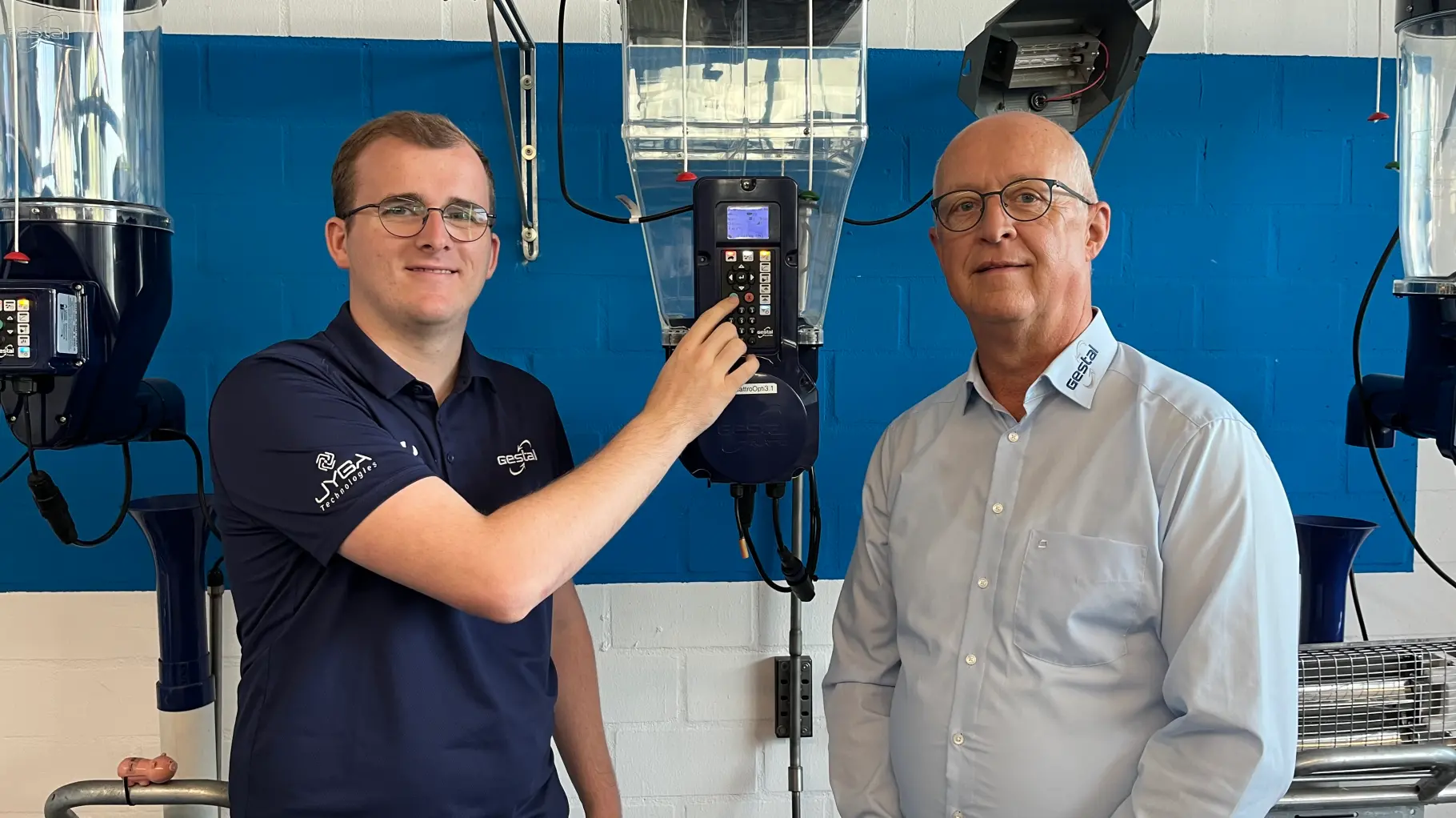
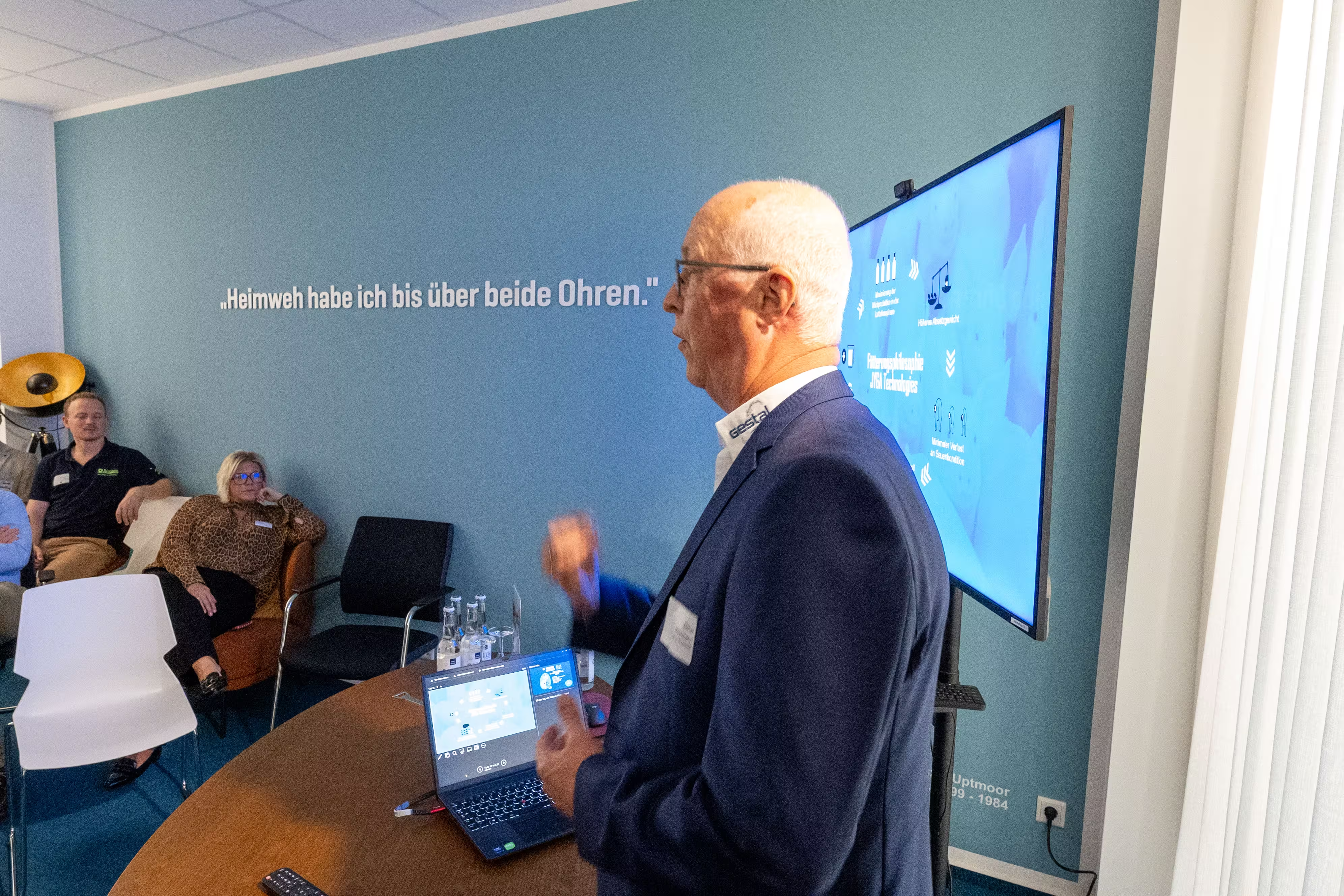
In his session, Elmar Moormann demonstrated how automated, individually tailored feeding already delivers better animal welfare and stronger performance in sow husbandry today – and where the technology is heading.
The principle behind the system developed by JYGA Technologies: every sow carries an ear transponder and, via a trigger in the trough, calls up her individually calculated ration at defined times. The data flows over Wi-Fi into the management software. Whether on the smartphone app, on the PC, with the handheld reader or directly via the keypad on the feeder, the farmer can see immediately whether an animal has eaten her full allocation and whether her feed curve needs adjusting. One daily check of animal, trough and water via the transponder is all it takes – clearly defined routines take pressure off the barn team.
Practical experience shows that correctly managed, individual feeding measurably extends the productive life of sows. At the same time, feeding behaviour serves as an early-warning system: when a sow deviates from her curve, that is often the first sign of a health issue. Or, as Elmar Moormann puts it: "If we treat the animals properly, they give it back to us."
Just as important as the technology itself is its robustness in everyday operations. Following the "keep it simple" principle, the system needs no cabling, the feeders continue to run autonomously if the network fails, and a global service team is available around the clock. Every new development is first trialled on the company's own farms with a total of 2,200 sows. The next step is already in testing: AI-supported feed control – still on an individual-animal basis, because every sow is different.
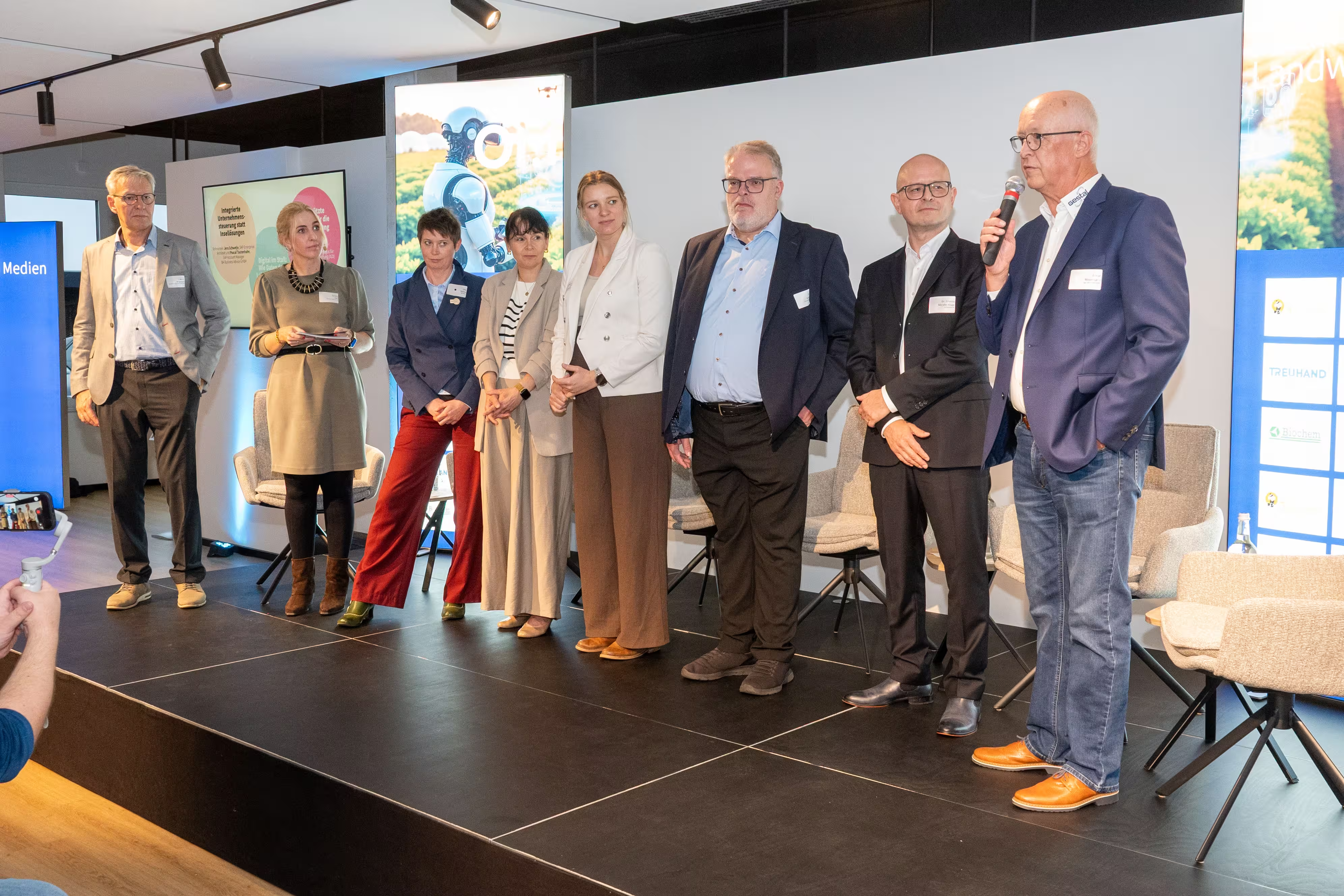
Panel discussion: AI as a tool – with responsibility
The closing panel brought together, among others, Franz-Josef Holzenkamp (Honorary President of the German Raiffeisen Association), Dr. Christian Bock (Landwirtschaftliche Rentenbank), Dr. Bastian Kubsch (Fraunhofer Institute for Computer Graphics Research IGD), Andres Ruff (Heidemark) and Matthias Schulze Steinmann (top agrar). The discussion was moderated by OM-Medien reporters Oliver Hermes and Giorgio Tzimurtas.
As OM-Medien and top agrar summarise in their coverage, the panel was largely united in its underlying view: artificial intelligence is not a threat to agriculture but is set to become a central tool – provided that research, policy-makers and practitioners work together and farmers are properly trained for it. At the same time, it was clear that this development comes with responsibility.
From our perspective, three themes stood out and ran through the entire evening: first, the question of tangible economic benefit – new technology has to pay off, and early detection only makes sense if it costs less than the damage it prevents; second, the question of who stays in control as digitalisation advances; and third, the question of where farm data ends up and how it is protected. The consensus: data protection matters, but it must not lead to missing out on the opportunities new technology offers.
Cost, benefit, control and data security – these are also the criteria against which we assess feeding technology in our consulting work. And it is precisely why an approach that stays simple, robust and manageable for the farm is so convincing in sow feeding.
Networking late into the evening
At the get-together that followed, guests took plenty of time for personal exchange. Our thanks go to OM-Medien for organising the event, to everyone on stage and on the panel – and to all the visitors to our session for so many good conversations.
Impressions and coverage
- Clip with statements from the evening: Watch the video on YouTube
- OM-Medien coverage (in German): OM-Forum discusses the opportunities and challenges of AI in agriculture
- top agrar review (in German): AI in agriculture: innovation against cost pressure and competition for land
- Pre-event feature from the Vechta showroom (in German): How automated sow feeding improves animal welfare
Source note: The summary of the keynote and panel discussion draws on the coverage by OM-Medien and the review by top agrar (Eva Piepenbrock, 23 September 2026). The full articles are available via the links above. The photos were kindly provided by om-online.de.
Would you like to learn more about automated, individually tailored sow feeding, or have your feeding strategy reviewed? Get in touch – we look forward to the conversation.
.avif)